


Older people often complain of pain in the joints of the fingers.This is due to various inflammatory processes, disorders and degenerative changes in the tissues of the joints, cartilage, ligaments and tendons, as well as the consequences of injuries.But there are also many diseases that cause similar symptoms at a young age.
In this situation it is important to identify the cause of the pathology in time, so as not to trigger the disease, which without adequate treatment can lead to serious consequences.
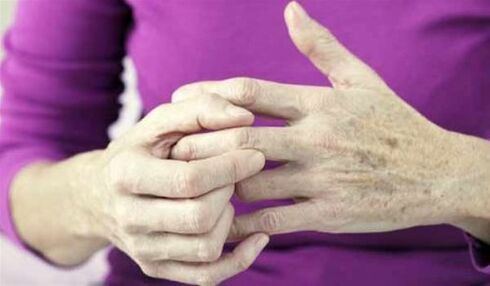
Common causes of pain
The causes of discomfort in the joints of the fingers can be divided into 3 groups:
- Pain caused by inflammation.They are most pronounced in the morning and after the hands have been resting for a long time.It decreases with physical activity.There are symptoms such as redness of the skin, swelling and stiffness when bending and straightening the fingers.
- Pain associated with breakdown of the cartilage structure and bone tissue.Caused by age-related and hormonal changes, occupational stress and genetic predisposition.
- Mechanical and post-traumatic pain.Associated with prolonged physical activity and the consequences of injuries.
Diseases with this symptomatology
Let's consider the most common inflammatory pathologies.
Rheumatoid arthritis
It can occur at any age and is more often diagnosed in women.The disease affects the joints of the middle and index fingers.It is characterized by morning swelling, stiffness of joint movements, increased aching pain during the day and decreased in the evening.The skin in the area of damaged joints becomes red and swollen.The development of the pathology leads to damage to the larger joints of the hands and disturbances in the functioning of internal organs.
Rheumatoid arthritis is also characterized by symmetry: when the fingers of the left hand are affected, damage also occurs in the right hand.A characteristic sign is the formation of rheumatoid nodes, deformation and curvature of the fingers.
Gout
Pathology associated with metabolic disorders and formation of excess uric acid salts.It is formed in people who consume foods rich in purines (meat, broths, smoked and salty foods, strong black tea and coffee).The pathology begins with damage to the thumb joint: pain at night, after wearing heavy objects, stiffness of movements, the formation of a pineal seal on the joint, redness and swelling of the skin.
Psoriatic arthritis
It is a consequence of psoriasis and is characterized by an inflammatory process in all joints of the fingers, accompanied by redness, swelling, stiffness of movements and a change in the appearance of the hands (fingers resemble sausages).The pathology is characterized by asymmetric lesions: if the pain occurs in the area of the little finger and index finger of the right hand, on the left the middle and ring fingers can be affected.The pain is localized in the area of the phalanx of the nail and occurs when bending the fingertips.
Reactive arthritis
With an infectious lesion of the body and the penetration of foreign microflora into the joints, a pathology characterized by acute pain lasting for several days, fever, chills and high temperature may occur.Symptoms are more pronounced in case of multiple joint damage: polyarthritis.
Stenosing ligamentitis
Damage to the annular ligament of the fingers.It occurs due to the consequences of diabetes mellitus, rheumatoid arthritis and excessive physical exertion.It is characterized by painful damage to all joints except the little finger;difficulties arise with flexion and extension of the fingers, which require effort.During extension, clicks occur due to a violation of the elasticity of the ligaments and tendons.As the pathology worsens, swelling is observed, the skin turns blue and a feeling of numbness occurs.Symptoms are more intense at night and in the morning.
Other inflammatory diseases
In addition, the causes of pain are:
- Arthralgia.It occurs due to inflammation or mechanical damage.The fingers become red and swollen, and difficulties arise even when performing the simplest operations.
- Rheumatism.It is a complication after a sore throat.In addition to joint pain, disturbances in the functioning of the cardiovascular system occur.
- Bursitis.Accumulation of fluid in the joint capsule, resulting in inflammation and swelling.When you press on the pad of the affected finger, you notice a sharp pain.The skin takes on a dark red tint and the temperature may be elevated.The pathology very often develops as a consequence of an injury.
Other disorders that cause discomfort in the joints of the fingers can be tenosynovitis, osteomyelitis, de Quervain's disease, panaritium, etc.
Osteoarthritis
It is characterized by painful sensations caused by the destruction of cartilage and bone tissue in the joints due to metabolic disorders, hormonal imbalances, professional stress, consequences of injuries and genetic predisposition.
The disease develops gradually, affecting all fingers in turn.Increased pain is caused by physical activity, the hands become numb and painful, and a characteristic crunching sound occurs when the fingers move.External changes affect the shape of the fingers: due to the thickening in the central part, they resemble a spindle;with advanced disease, their curling is noted.This clinical picture is more pronounced in older people.
Varieties of osteoarthrosis are rhizarthrosis (damage and deformation of the thumb joint) and polyosteoarthrosis (impairment of the functioning of the interphalangeal joints).
Cervical osteochondrosis
With disorders of the musculoskeletal system associated with the cervical vertebrae, pinching of the nerve endings of the upper extremities occurs.Pain in the joints of the hands can occur when turning the head, sneezing, coughing.In its manifestation it resembles an electric discharge passing along the hands.Patients feel numbness and stiffness when they move their hand.
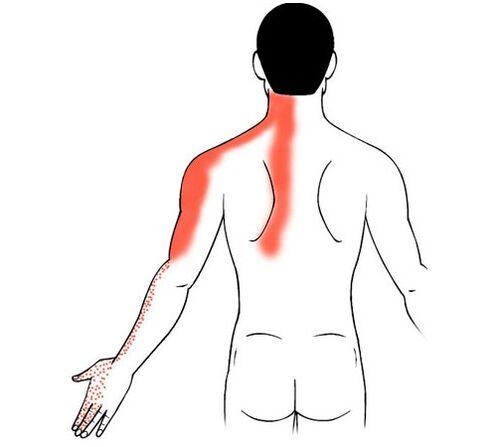
The appearance of pain in the joints of the hands can be caused by mechanical damage and injury, including:
- Bruises, pinches, burns, cuts.Injuries to the periarticular or connective tissues occur, where the blood supply is cut off or nerve endings are damaged, causing pain.
- Dislocations.The most common is a dislocated thumb.Sharp pain appears, the area around the protruding joint turns red and swells.
- Ulnar nerve damage.With advanced neuropathy, numbness of injured limbs and impaired motor functions occur.
- Tunnel syndrome.Damage to the joint of the index finger of the right hand associated with prolonged work at the computer.With prolonged stress, compression of the nerve endings can occur.
- Vibration syndrome.Associated with the professional activities of people dealing with vibration technology.The pathology goes through several stages: from pain and numbness to complete loss of sensitivity of the fingers, which acquire a whitish tint due to insufficient blood flow to the vessels.
Who to contact and how to treat
If symptoms of pathology appear, the patient should consult a specialist (surgeon, traumatologist, rheumatologist, neurologist) or a therapist to conduct diagnostic tests and prescribe adequate treatment.
Depending on the cause and symptoms of the pathology, the specialist will tell you what to do to eliminate the pain syndrome and restore the lost functions of the damaged organ.The scheme involves the use of physical and drug therapy, folk remedies, massage and therapeutic exercises.During treatment it is important to follow a diet that limits the foods that cause the development of the pathology.During the rehabilitation period, sanatorium-resort treatment is indicated.
Methods to relieve pain
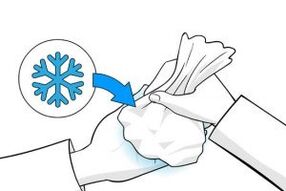
At home, in case of injuries and mechanical damage to the joints, the patient is provided first aid by applying an ice pack to the damaged area for 2-3 hours or treating the affected surface with an anesthetic (a product containing chlorethyl).In case of dislocations and compound fractures of the limbs, it is important to ensure immobilization before a medical examination.
For inflammatory pathologies, antibiotics, hormonal drugs, non-steroidal anti-inflammatory drugs and glucocorticosteroids are used.
For diseases associated with disorders of cartilage and bone tissues, chondroprotectors are used.
For minor inflammatory processes, local painkillers and anti-inflammatory drugs are used.
Preventive measures
Joint diseases can be treated by promptly consulting a doctor and following the prescribed recommendations.They will help prevent the development of pathologies: proper nutrition, the absence of bad habits and the reduction of physical activity on the fingers.A good effect is achieved by performing a series of therapeutic exercises for the hands, massage of the limbs, relaxing and calming baths with decoctions of medicinal plants.